Futures studies · Philosophy of science · Foresight

Veli Virmajoki

I study what could happen, how we can think about it, and why it matters.

I am a Senior Researcher at the Finland Futures Research Centre, University of Turku, and Docent in Philosophy of Science. My work moves between futures studies, philosophy of science, historiography, and applied foresight. I develop concepts and methods for studying possible futures of work, science, universities, narratives, and historical alternatives.

Delphi Narrative foresight Philosophy of futures studies Futures of work Futures of science University futures Counterfactuals Possibility space Causal Layered Analysis Research Radar Horizon scanning

Research Radar

Recent work worth noticing.

The Research Radar is a selective reading page for high-quality work around futures studies, Delphi, narrative foresight, futures of work, university futures, philosophy of science, historiography, counterfactuals, and related fields. It starts from references already close to my research and can later be supported by strict weekly scanning.

Open Research Radar

A way through the work

Futures are not only imagined. They are structured, argued for, and limited.

My research asks how futures become thinkable. This means studying methods such as Delphi, scenario work, narrative foresight, horizon scanning, and Causal Layered Analysis, but also the philosophical assumptions behind them.

The same question appears in several directions: futures of work, futures of science, futures of universities, philosophy of historiography, and counterfactual reasoning. The topics look different, but they share a concern with possibility, explanation, time, and the conditions under which alternatives can be seen.

Not only technical examples

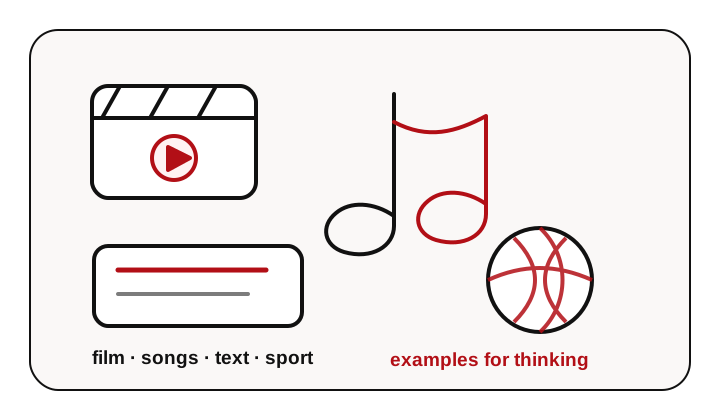
Films, songs, and sports can also carry ideas.

Line drawing of film, music, writing, and sport as sources of examples

The work is academic, but examples can also come from The Shining, It’s a Wonderful Life, Bob Dylan, rap, and sports. They make questions of narrative, timing, pressure, failure, and possibility easier to see.

Songs, films, sayings

Small pieces of wisdom for large claims about futures

A place for lines from songs, films, and public culture that can irritate, sharpen, or humble foresight talk. The point is not quotation collecting; the point is commentary.

“Don’t need a weatherman to know … way the wind blows”

Bob Dylan, “Subterranean Homesick Blues,” on Bringing It All Back Home, Columbia Records, 1965. Written by Bob Dylan.

If so, and if foresight people think they are weathermen, oh my gosh. Can one argue with that really? The useful question is what foresight adds when the wind is already felt: Do we need to accept it and reveal those who still listen to weathermen; ask them to look in the mirror?

Methods and concepts

Some ways the research is built

See the full research page →

Dialectic Delphi

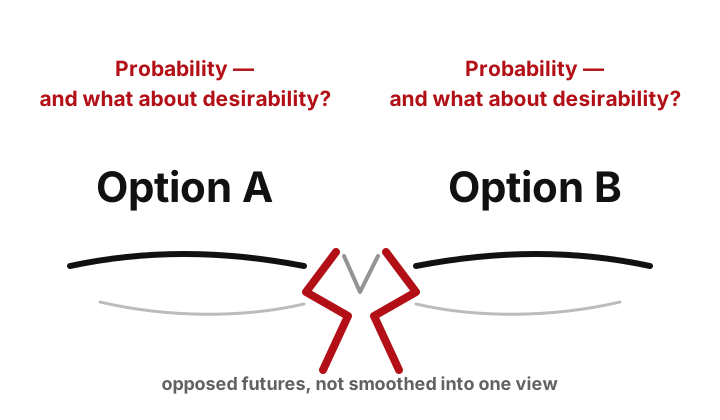
Dialectic Delphi is a method I have developed for working with opposed futures. It places different directions side by side, so that probability, desirability, arguments, tensions, and trade-offs can be studied together.

Rupture in the ground with option A and option B on different sides

Futures as a space of movements

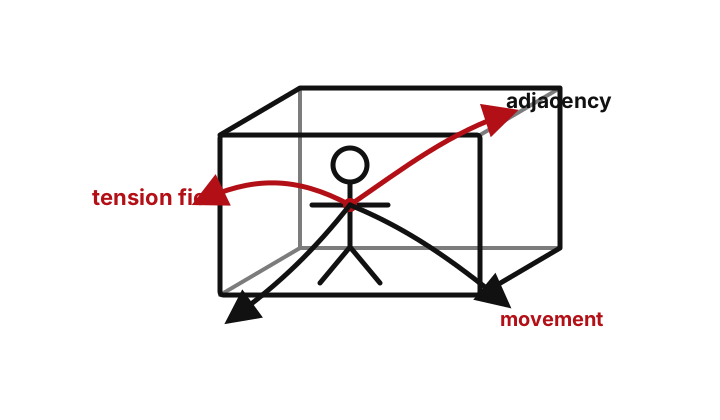
One part of my work treats futures less like a single road and more like a conceptual space. We can ask where a work arrangement, a university, or a scientific practice is located, what dimensions shape it, and what kinds of movement are possible.

Three-dimensional box with a figure, arrows, and labels for tension field and adjacency

Narratives with branches

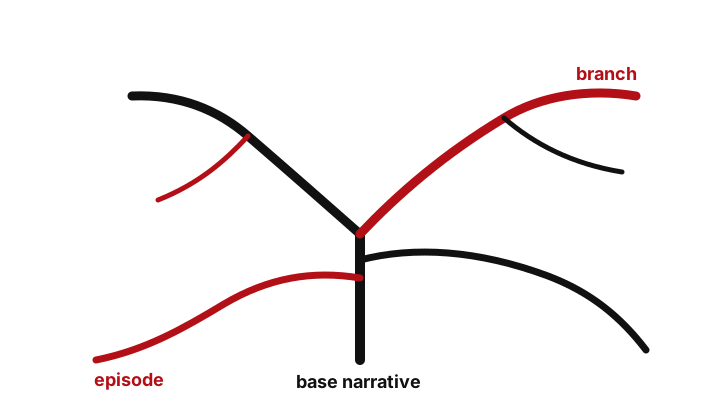
A narrative of the future is not only a story to communicate a scenario. It can be worked with. Episodes can be added, and these episodes can make different branches visible.

Simple tree drawing showing a narrative branching into possible futures

The base underneath: deep horizon scanning

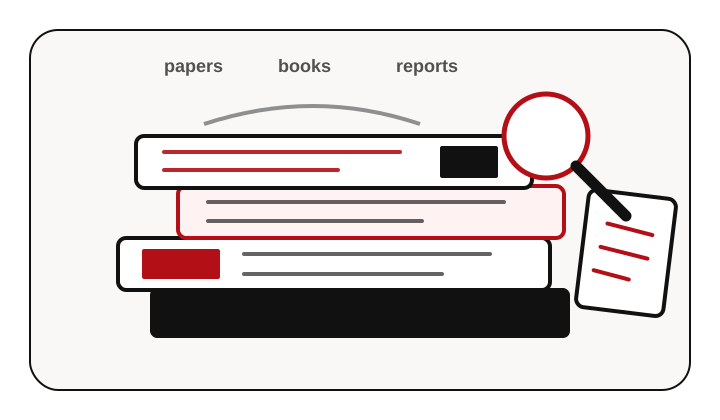
The other tools still rest on careful scanning of high-quality papers, books, and reports. In many projects this means reading across hundreds of serious sources, so that the concepts and methods do not stand on thin trend lists.

Pile of books, papers, and reports with a scanning lens

Arguments

A few arguments to enter the work

Read more →

Delphi is not only about consensus.

I think Delphi is often too quickly understood as a method that tries to make people agree. In futures research, disagreement can be useful because it shows tensions, trade-offs, and different meanings inside the same future issue.

Read more

The future of work is about arrangements.

Future work should not be reduced to guesses about exact jobs. The deeper issue is how work is arranged: where it happens, how it is measured, and how technology, place, organisations, and life outside work are connected.

Read more

People do not live inside trends.

Narratives matter because they connect large changes with human experience. They can make futures more concrete without making them look like predictions.

Read more

Where the work appears

Research, books, reports, talks, and public discussion

The publication list gives the formal record. The work also appears in reports, stakeholder work, presentations, interviews, and public discussion. The important point is the nature of the work: careful arguments, frameworks, and methods that travel between futures studies, philosophy, and historiography.

Peer-reviewed arguments

Articles and chapters where futures studies, philosophy of science, historiography, and counterfactual thinking are developed through careful conceptual work.

Books and frameworks

Long-form work on causal explanation, knowledge, futures of work, and conceptual tools that make complex research areas easier to discuss.

Presentations and interviews

I regularly present the work in academic and professional settings, take part in interviews, and join stakeholder discussions, including keynote speaking.

Methods that connect fields

Dialectic Delphi, narratives-with-branches, futures as space, CLA extensions, and philosophical analysis used to make futures research more reflective.

Selected work

Recent and representative publications

All publications →